Home avatar

Daily Deep Think

The views expressed here are the author's own and do not represent any organization, company or institution.

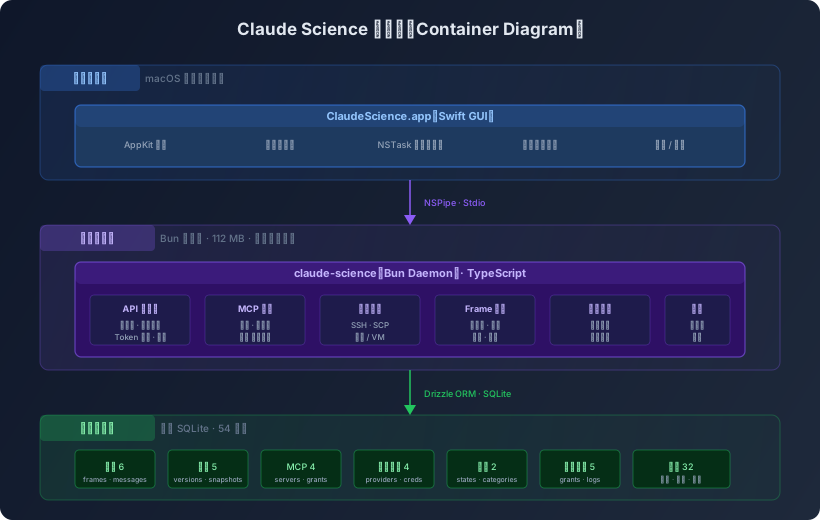
Reverse Engineering Claude Science: From 54 Tables to Modern TCM

A 67 MB DMG installer, 164 MB unpacked, hiding Anthropic’s Claude Science (internal codename Operon). After reverse engineering it, I found 54 SQLite tables, a 9-layer security model, 30+ bioinformatics skills, and a complete AI agent platform for computational biology.

On the other side is TCMSP, an AI-native Traditional Chinese Medicine systems pharmacology platform under active development. Looking at the two projects side by side, some design ideas are worth cross-referencing.
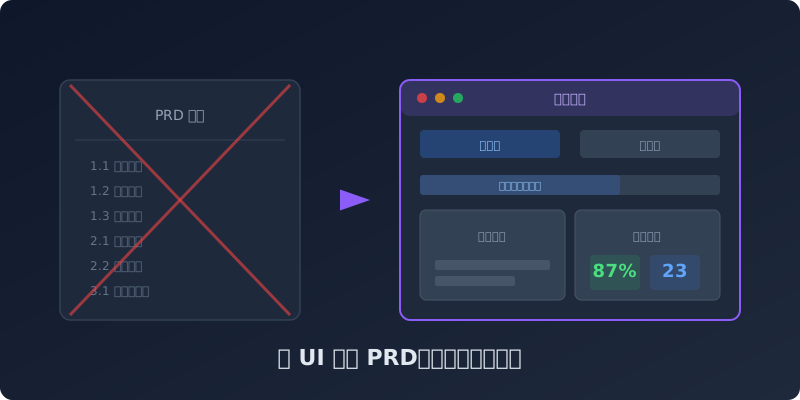
A New Playbook for AI Programming: UI First, Then the PRD

Everyone knows the standard Vibe Coding flow by now: write user stories → produce a PRD → AI generates the backend → AI generates the frontend → demo and verify. It works, but at delivery time the UI interaction experience often falls far short of expectations. Where does it go wrong? In the PRD itself.

PRDs (Product Requirements Documents) were never that friendly to humans in the first place. Three reasons:

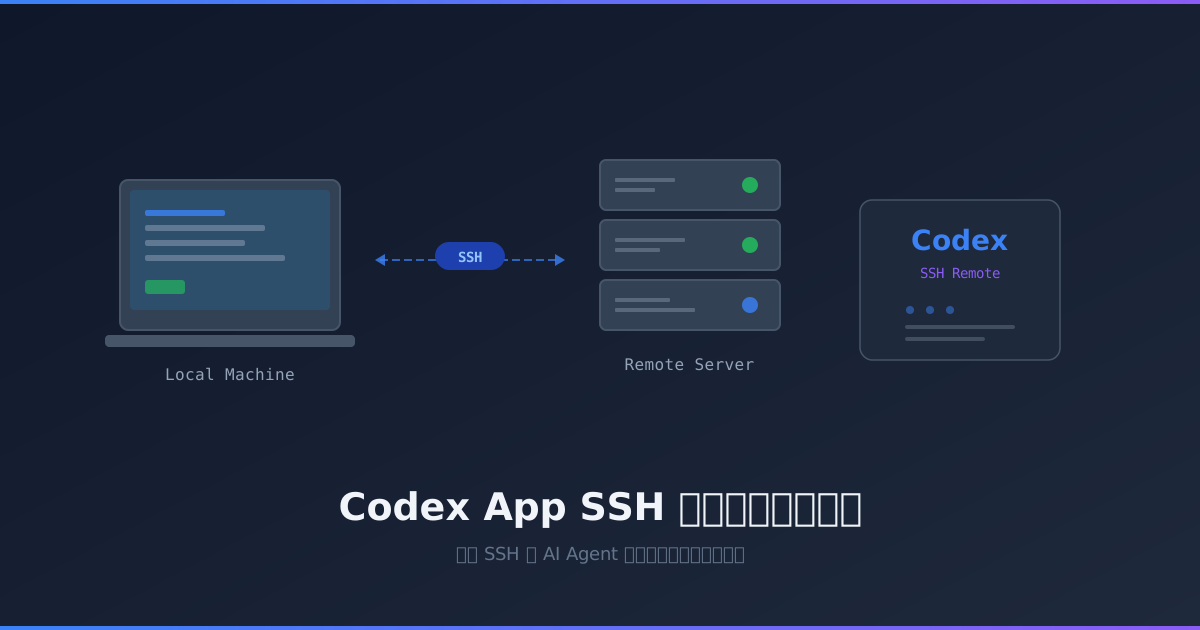
A Guide to SSH Remote Development in the Codex App

Update note: This post is based on the Codex App as of May 2026. SSH Remote is still in alpha, and the configuration methods and UI entry points may change with new releases. If anything here has gone stale, refer to the official documentation for the latest.

The Codex App now supports connecting to remote machines over SSH; the feature is currently in alpha.

If you develop on remote servers, train models, or run environments there, this is worth a try. It lets you connect to a remote server directly inside Codex and work in the remote filesystem and shell — no more jumping back and forth between a local terminal, VSCode Remote, SSH, and tmux.

TencentDB Agent Memory: Real Layered Memory for AI Agents

If you’ve spent serious time with AI agents, these scenarios will feel familiar:

  • Re-explaining the project background, coding conventions, and output format preferences in every new session
  • Halfway through a long task, the context fills up with tool logs and the agent starts “forgetting” earlier instructions
  • Wanting the agent to learn your working habits, but having no way to do it except hand-writing a system prompt every time

Memory isn’t about making the AI store everything — it’s about making sure humans never have to repeat themselves. That’s the core idea behind TencentDB Agent Memory.

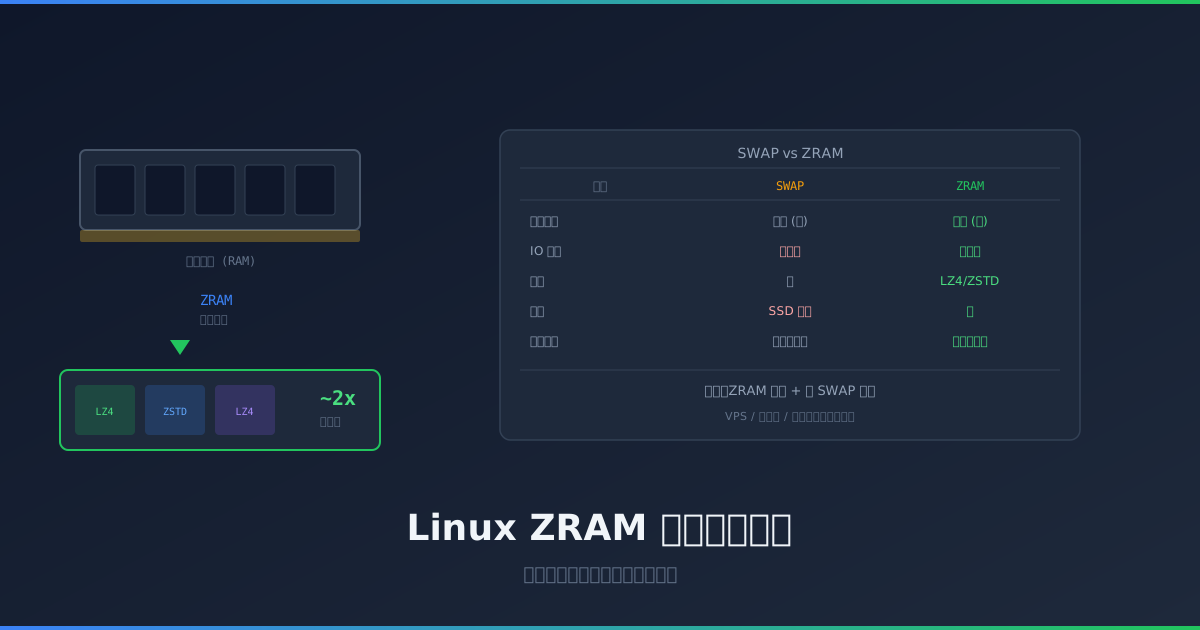
Linux Out of Memory? ZRAM Compression and Practical Config

Running out of memory is the norm on Linux devices — especially small-memory VPSes, Raspberry Pis, and old laptops. The traditional fix is adding a SWAP partition, but many people find the box actually gets laggier after adding one.

Starting from how things work under the hood, this post compares SWAP and ZRAM so you know exactly which to use in which scenario, and how to configure them.

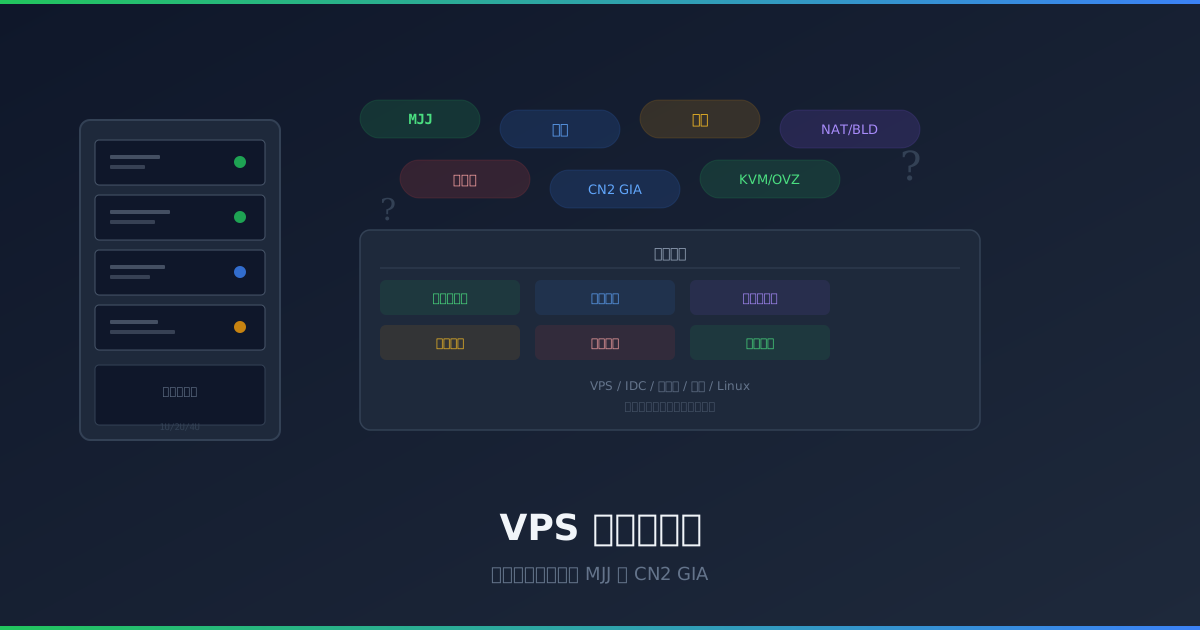
VPS Scene 101: The Complete Dictionary of Hosting Slang

The VPS scene runs on a distinctive system of slang that reads like hieroglyphics to newcomers. This post collects the common terms and abbreviations so you can get up to speed fast.

Originally referred to users hanging around the Hostloc forum; now a blanket term for anyone obsessed with tinkering with VPSes. It comes from a Hostloc forum meme, short for 买鸡鸡/没鸡鸡 (“bought a chicken / no chicken” — interpret it however you like). It started as a slur but gradually evolved into a self-deprecating badge of in-group identity, and in most contexts today it carries no malice (though some also use MJJ for players who pay little and demand much).