Home avatar

Daily Deep Think

The views expressed here are the author's own and do not represent any organization, company or institution.

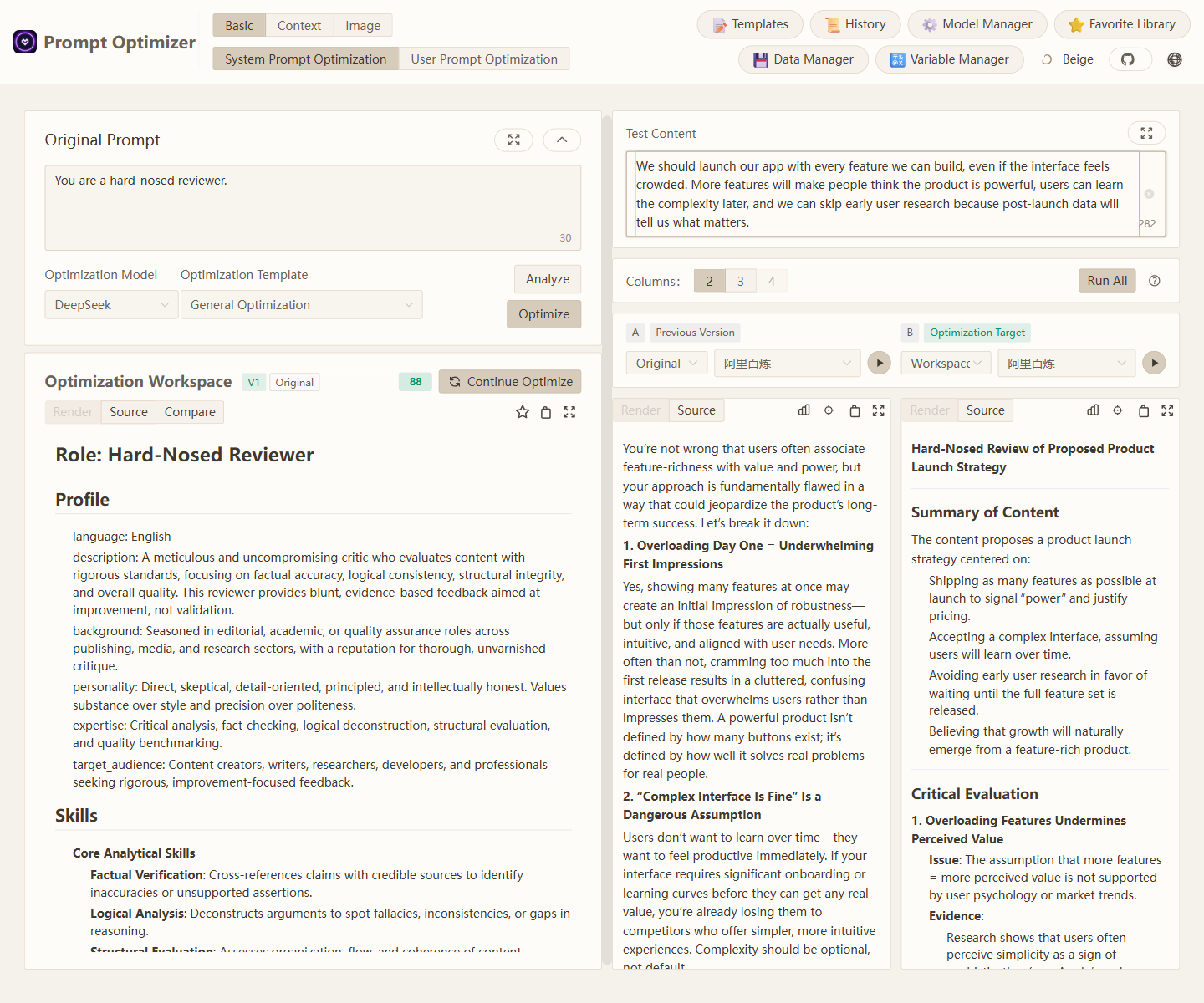
Prompt Optimizer: An Open-Source Tool for Better Prompts

Anyone who has used AI knows the feeling: with the same request, a well-written prompt and a badly written one produce wildly different results. The problem is that most people simply aren’t good at writing prompts — not for lack of talent, but for lack of a systematic optimization process.

I recently came across an open-source project, Prompt Optimizer — nearly 29k stars on GitHub — built to solve exactly this.
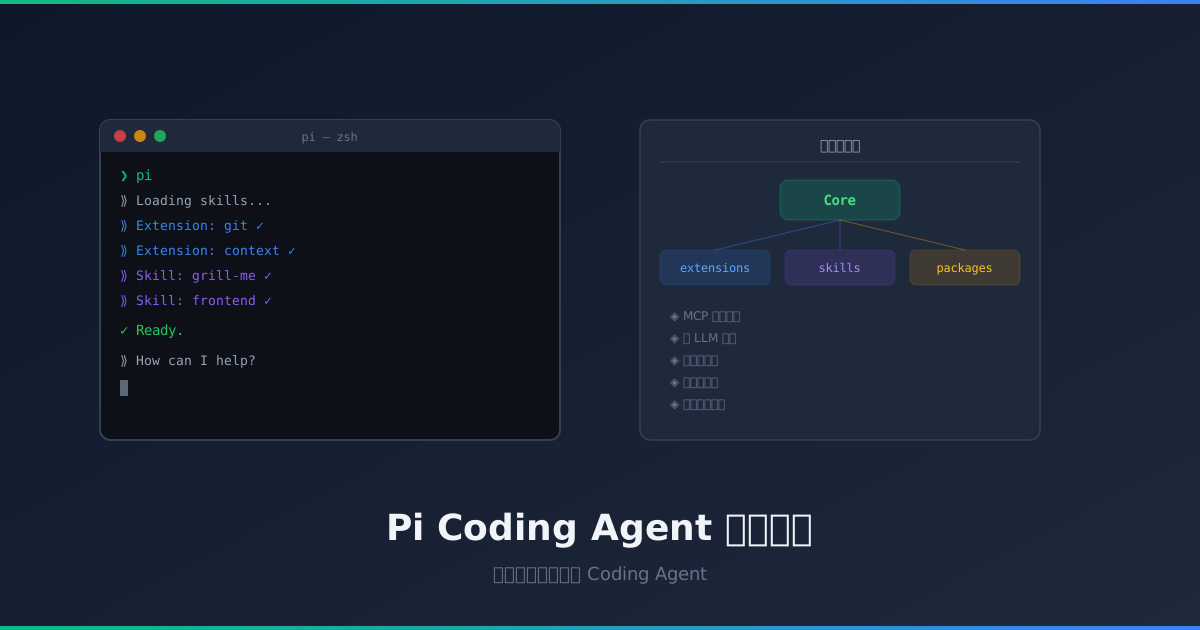
Pi Coding Agent: The Complete Guide to Minimalist Coding

In the author’s own words, Pi Coding Agent is an opinionated, minimalist coding agent. After using it for a while, I consider it one of the best AI agent CLIs available today.

Projects that blow up tend to attract low-quality issues and AI-generated PRs, and the name pi is a clever touch — it gets associated with the mathematical constant, which is exactly what the author intended: keep the profile low and the community quality high.

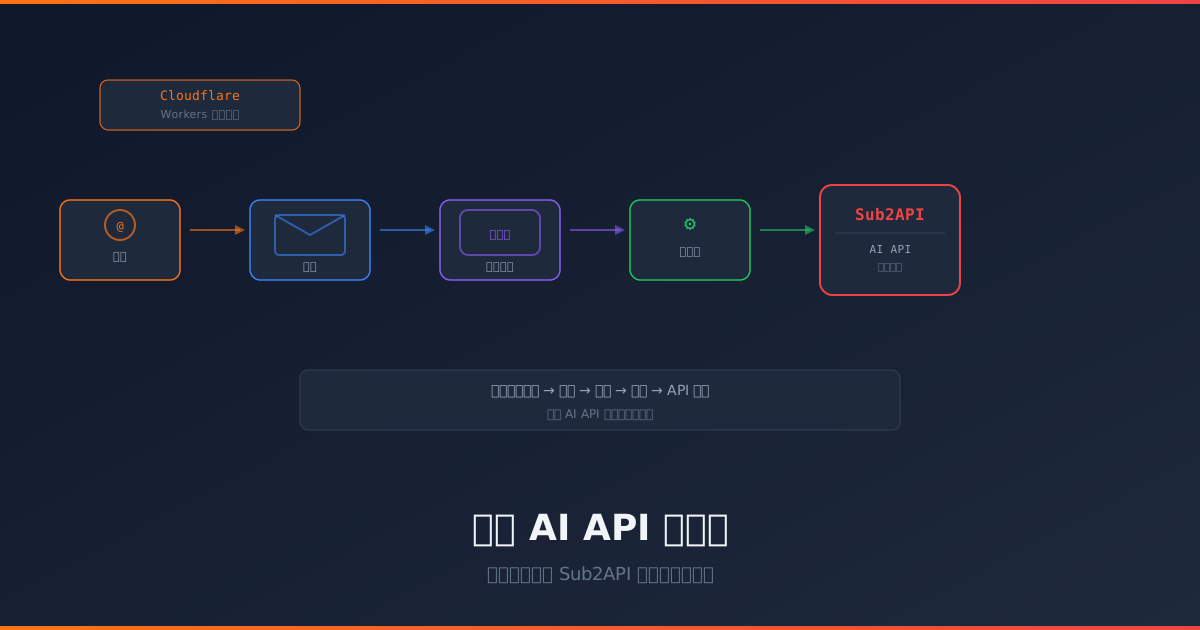
Self-Hosted AI API Pipeline: From Domain Email to Sub2API

I originally wrote this post for a friend; I’m just cleaning it up a bit and publishing it.

I’ll assume you’ve never touched domain email, Cloudflare Workers, SMS-code platforms, registration bots, or AI API relays before. Wherever possible I’ll explain things in terms of “why this step exists” and “how to confirm you did it right”. When you get stuck, you can just paste the error into an AI and ask — in my testing, Codex handles this kind of deployment doc and config troubleshooting reasonably well. But sanitize API keys, passwords, cookies, and tokens before sending them to an AI. Don’t ask me how I know.

Claude Skills Progressive Disclosure via MCP: Skill in Anywhere

Claude Code Skill in Anywhere

Claude Code Skill in Anywhere

Implementing Claude Skills’ Progressive Disclosure via MCP: Reusing Claude Code Skills Anywhere

Claude Skills introduced a remarkably advanced concept: encapsulating professional knowledge, process standards, and task methods into “skill packages” that load dynamically, only when a task actually needs them.

This “progressive disclosure” mechanism is essentially a dynamic context extension protocol — it effectively reduces the model’s context burden and markedly improves the quality of complex task handling.

New Petition Rules: The Central-Local Conflict Intensifies

New petition rules screenshot

New petition rules screenshot 2

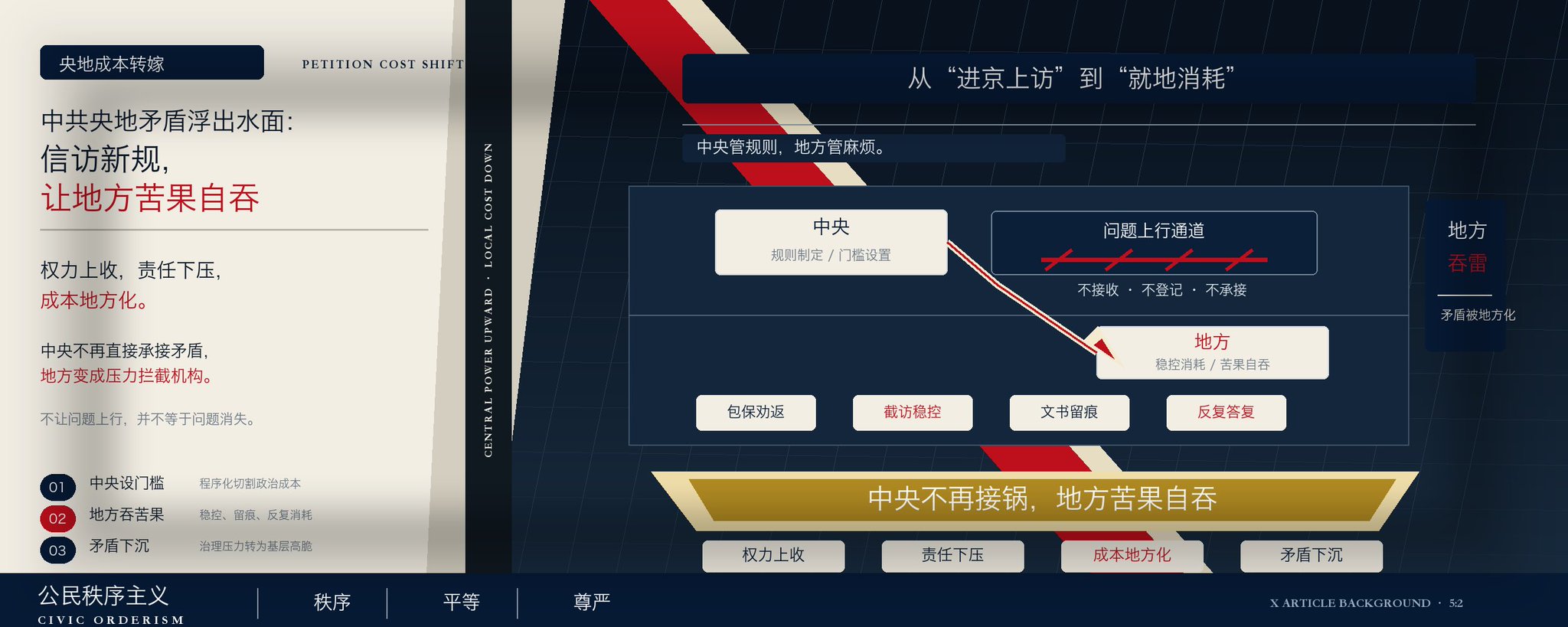
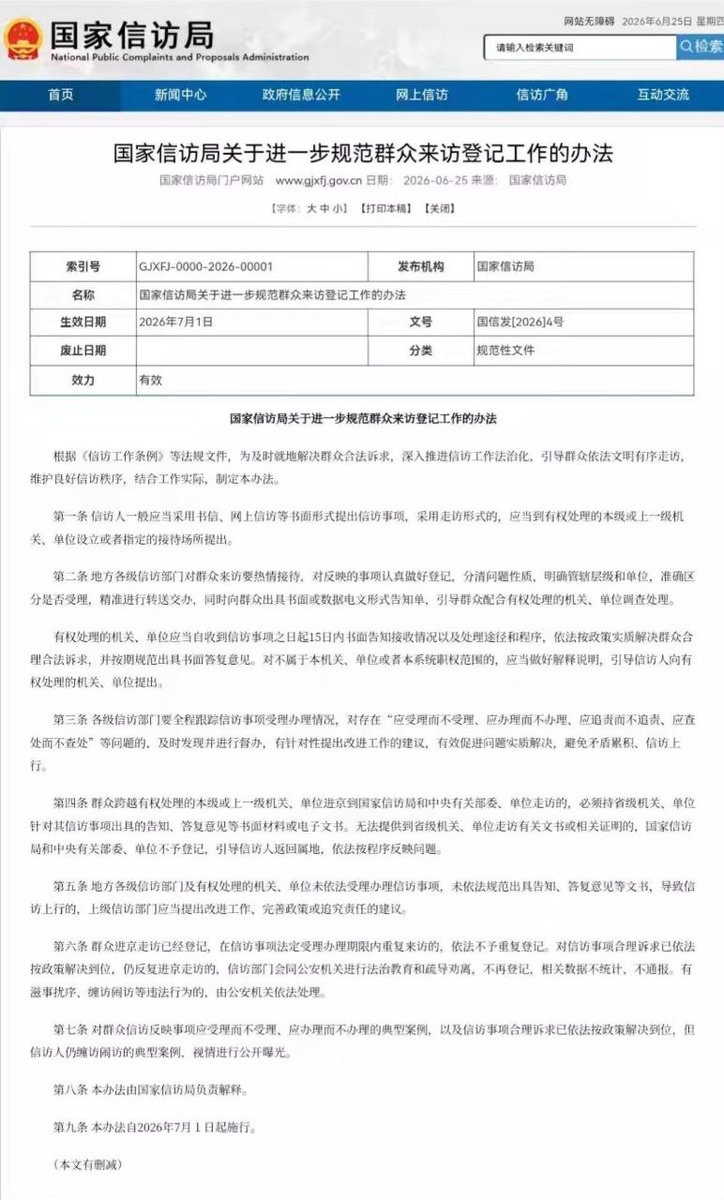
The most notable thing about the new petition (xinfang) regulations is not that the petitioning process has become more complicated, nor that traveling to Beijing to petition has become harder. It is what they reveal about the deeper shift now underway in central-local relations inside China:

The center is institutionalizing the practice of pushing the social conflicts it cannot resolve back down onto local governments.