
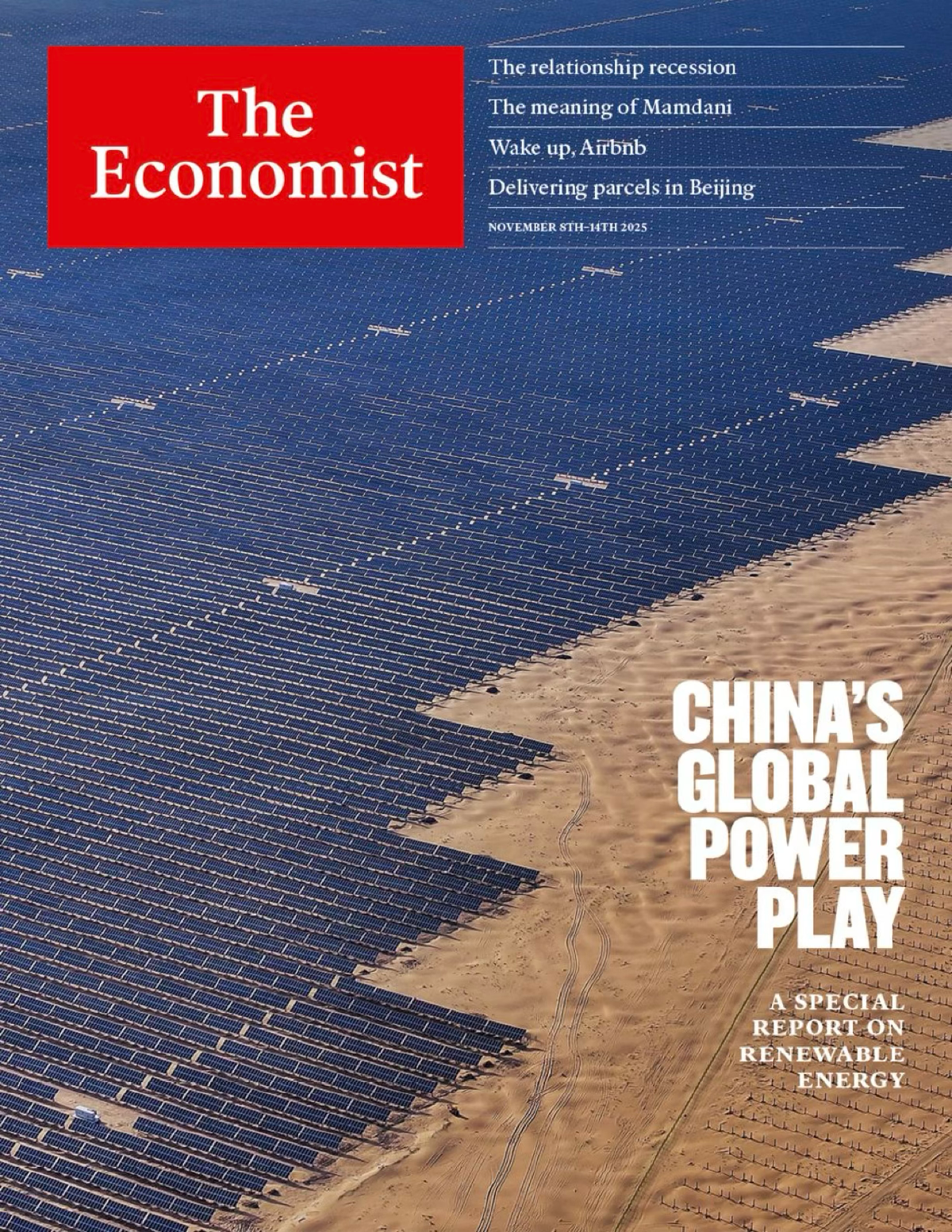

The Economist has always excelled at using polished prose to gloss over savage fractures, dressing up the disintegration of the postwar free-trade architecture and superpower zero-sum warfare as a dignified “Rebalancing the World.” Peel back the magazine’s glossy rhetoric, however, and one confronts an unyielding reality: the high priests of globalization are boarding up their doors, tariff iron curtains are slamming down, and major economies are locking each other in a death grip over industrial subsidies and zero-sum geopolitical spheres.
Washington’s Enclosure: A Liberal Dirge and Tariff Walls #
Washington’s political elite has personally buried what remained of the Bretton Woods consensus it spent half a century erecting. The dogmas once preached as gospel—small government, low tariffs, frictionless factor mobility—have been smashed to dust under the CHIPS Act, the Inflation Reduction Act, and dense reams of unilateral sanctions.
Tariffs are no longer transient bargaining chips; they have become permanent geopolitical trenches. Cross-border supply chains are severed by administrative decree. As detailed in our breakdown of the economic blowback of chip restrictions, the attempt to forcefully onshore advanced foundries and semiconductor ecosystems has purchased little beyond stubborn domestic inflation and massive balance-sheet impairments for American tech giants.
At the core of this anxiety lies the hemorrhaging capacity of federal governance. A thirty-six-trillion-dollar sovereign debt hangs overhead like the sword of Damocles, with net interest payments alone devouring a trillion dollars of public revenue each year. Partisan factions stage perpetual theater on the Capitol steps, turning foreign rivals into all-purpose scapegoats to mask domestic administrative rot. The beacon on the hill has flickered out; in its place stands a harried gatekeeper feverishly boarding up windows against the storm.
Subsidy Cannibalism and the Second Breakout #
Across the Pacific, the retirement of land-driven fiscal expansion and the real-estate pillar is complete. In their place stands a total commitment by state capital and command mechanisms toward advanced manufacturing, the new energy triad, and complete supply-chain self-sufficiency.
The political will behind “new quality productive forces” is austere: it prepares for full-scale encirclement and extreme stress. China has pushed industrial output to the red line. Solar arrays, battery storage, and electric vehicles steamroll global markets with insurmountable cost efficiencies, instantly triggering Western tariff walls erected under the banner of “anti-dumping” and “overcapacity.” As explored in our analysis of the rare earth war and geopolitical depth, in zero-sum rivalry, every industrial advantage is immediately politicized into an existential security threat.
Surplus industrial capacity must find an outlet abroad. With North American and European borders slammed shut, Chinese exports course through the arteries of Southeast Asia, Latin America, and the Middle East. This is no gentle corporate globalization; it is a precarious, anxiety-driven breakout under relentless external compression.
Brussels’ Medical Chart: The Old Continent in the Vise #
Europe cuts a pathetic figure on this chessboard. The Franco-German engine has splintered over soaring energy bills, defense spending targets, and fiscal austerity limits.
Deprived of cheap Russian pipeline gas and marginalized in both frontier AI foundation models and leading-edge semiconductor lithography, Brussels has degenerated into an obese bureaucratic clearinghouse lacking the barest capacity for geopolitical self-defense. Facing Washington’s tariff extortion on one flank and the crush of Chinese factory efficiency on the other, the European Union’s sole defensive arsenal consists of Byzantine compliance checklists, privacy regulations, and carbon border adjustment taxes.
The fig leaf of European idealism has been shredded. Every metric on the bureaucrat’s medical chart flashes red: trying to fund an unsustainable welfare net while coerced by NATO mandates into diverting two percent or more of GDP into arms procurement. Squeezed between two continental titans, the Old Continent finds itself paralyzed and stripped of pride.
Compute Arms Races and the Liquidity Reckoning #
The tech sector’s delirium is wearing off. Generative AI was sold across Wall Street and Silicon Valley as the ultimate antidote to structural productivity decay. Yet computing clusters funded by hundreds of billions in capital expenditure devour staggering quantities of power and water while failing to generate self-sustaining cash flows.
Tech monopolies hoard enterprise silicon to build anticompetitive moats, while downstream startups collapse under crushing inference fees and arid unit economics. The so-called technological revolution has devolved into a standard-issue fixed-asset arms race among monopolists playing a winner-take-all game.
Simultaneously, the decade of cheap liquidity is definitively over. Central bank rate paths hesitate between sticky inflation and looming stagnation, forcing global markets to reprice every risk asset from scratch. Heavily indebted sovereigns and cash-burning balance sheets face brutal, unsentimental liquidation.
At this global table, the old rules are dead and no new covenant exists. Every player has swapped their cards for bare steel, coldly calculating which rival at the table will bleed out first.